
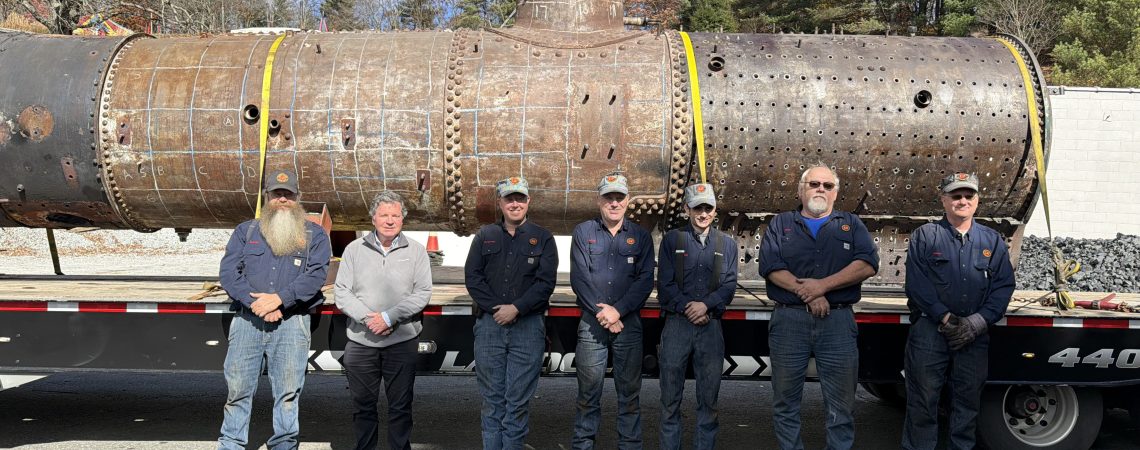
Work continues on the restoration of Tweetsie Railroad’s historic Locomotive No. 12, and the project has reached another important stage.
Recently, No. 12 was transported from Tweetsie Railroad to Maine Locomotive & Machine Works, where specialized work will continue as part of the locomotive’s extensive boiler repair.
Restoring a steam locomotive built more than a century ago requires highly specialized knowledge, equipment, and craftsmanship. Throughout the project, Tweetsie Railroad’s experienced crew has worked with other experts in steam locomotive restoration and certified boiler repair companies to evaluate No. 12 and determine the best approach for preserving the locomotive for future generations.
Why was No. 12 transported to Maine?
As work on the boiler has progressed, additional specialized repairs are needed that must be completed by licensed and certified boiler repair companies. Moving the locomotive to Maine allows the restoration team to complete this work using the equipment and expertise required for this stage of the project.
Much of this work involves components that cannot simply be replaced with off-the-shelf parts. New pieces must be engineered, fabricated, fitted, and inspected specifically for No. 12. For instance, a new firebox is being fabricated as part of this extensive repair process.
Preserving an important piece of railroad history
Built by Baldwin Locomotive Works in 1917, No. 12 is the only surviving steam locomotive from the East Tennessee & Western North Carolina Railroad (ET&WNC). It has been part of Tweetsie Railroad since the park opened in 1957 and has carried generations of families through the Blue Ridge Mountains.
That history is why Tweetsie Railroad is taking a thorough approach to the restoration.
The goal is not simply to get No. 12 running again. The work being completed today is intended to help preserve the locomotive and prepare it for many more years of operation.
Once the specialized work in Maine is complete, the restoration will move into its next stages here at Tweetsie Railroad, including reassembly, inspection, testing, and the many details required before No. 12 can return to service.
There is still work ahead, but transporting No. 12 to Maine represents another step forward in one of the most significant restoration projects in the locomotive’s history.
We look forward to sharing more updates as the work progresses.